
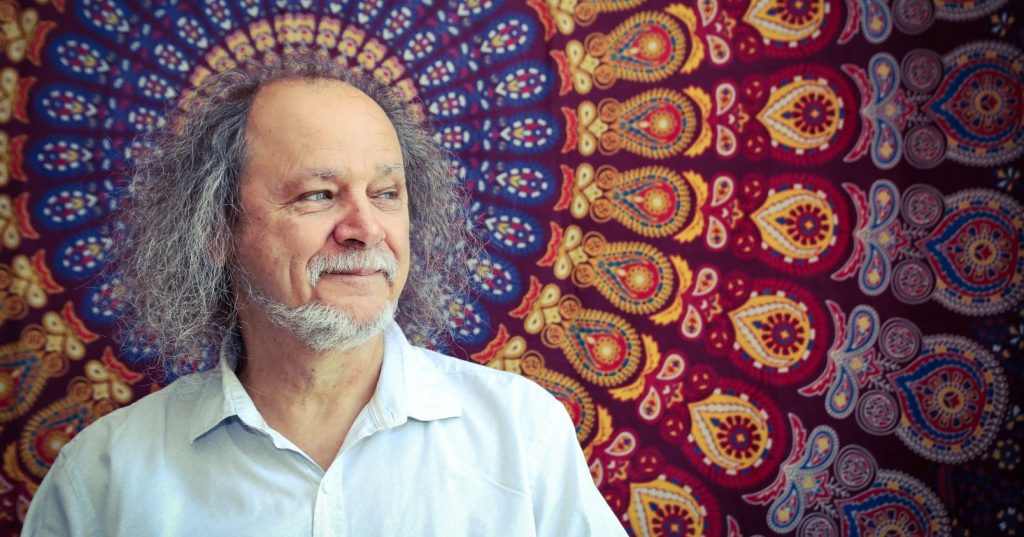
Prof. Włodzisław Duch, PhD, from the Faculty of Physics, Astronomy and Applied Computer Science, has joined the prestigious ranks of the winners of the ‘digital Oscars’ – the Digital Shaper award presented by the Digital Poland Foundation. The scientist from Nicolaus Copernicus University has been recognised for his many years of pioneering work on the integration of neurocognition with artificial intelligence.
The Digital Shapers list is a compilation of leaders, innovators and visionaries who contribute to the development of the digital ecosystem and the shaping of technological reality in Poland. This year’s winners are representatives of business, science, administration and the media who stimulate Poles’ digital activity and have outstanding professional achievements in the digital sector. Their selection was decided by an independent jury of the Digital Academy, which this year comprised over 260 members. In awarding the so-called “digital Oscars”, the achievements of the 2025 award nominees were taken into account. The announcement of the winners of the eighth edition of the competition took place on 9 March during the 18th TIME Economic Forum.
This year, the jury decided to award the title of Digital Shapers to 20 individuals across six categories: education, innovation and technology, investment, digital transformation, visionary, and collaboration. The awards went to individuals of exceptional courage, vision and determination who are setting the direction for technological development, promoting the skills of the future and creating solutions that are competitive with foreign markets.
Among this year’s winners was Prof. Włodzisław Duch, who was recognised in the ‘Visionary’ category for his work on artificial intelligence spanning over three decades, particularly in setting the direction for the development of brain-computer interfaces and neuromorphic systems. His vision of integrating neurocognition with AI by 2025 has become the foundation for the development of artificial intelligence systems with a high degree of interpretability and cognitive empathy. Prof. Duch’s pioneering research into a digital model of the brain simultaneously contributes to the development of technologies aimed at a better understanding of human potential and opens up new horizons for people in understanding machine consciousness.
Professor Włodzisław Duch is a world-renowned expert in the fields of physics, computer science and cognitive science, as evidenced by numerous awards, honours and invitations to join bodies bringing together technology experts. He was a founder and member of the Polish Neural Networks Society (1995), and subsequently the Polish Artificial Intelligence Society (2010). Since the late 1990s, he has been involved in the development of cognitive science in Poland; he co-founded the first journal in this field and the Polish Cognitive Science Society (2001). He served two terms as President of the European Neural Network Society (2006–2011), and in 2013 he was the only person from Poland to be elected as a Fellow of the International Neural Network Society and a member of the Complex Systems Commission of the Polish Academy of Arts and Sciences. He is also an honorary member of the International Artificial Intelligence Industry Alliance. Since 2013, he has headed the Neurocognitive Laboratory at the Interdisciplinary Centre for Modern Technologies at Nicolaus Copernicus University. He is also the head of the “Neuroinformatics and Artificial Intelligence” team, which forms part of the IDUB Centre of Excellence “Dynamics, Mathematical Analysis and Artificial Intelligence”. In September 2025, the World Academy of Artificial Consciousness awarded him the title of “Academician” for his contributions to the field of artificial intelligence research. He is also on the list of the world’s most influential scientists in terms of the number of citations of his articles.
In addition to Prof. Włodzisław Duch, Prof. Piotr Sankowski from the IDEAS Research Institute and Marianna Sidoroff from the Ministry of Development and Technology were also recognised in the ‘Visionary’ category. A total of four representatives from the academic community received the ‘Digital Oscars’.
Source: NCU Information Portal